Global News that you can trust, and where fredom of speech has no limits!

Unmasking Modern Day Slavery: The Truth Behind Corporate Profits
GLOBAL NEWS
Glenn Spillman
2/15/20268 min read

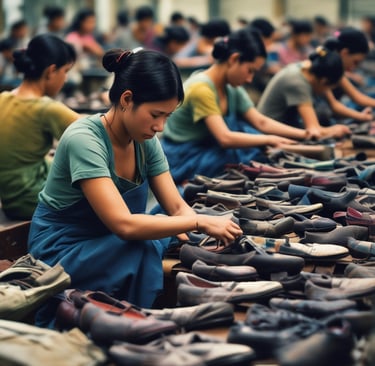
Introduction: The Hidden Cost of Consumerism
In the contemporary landscape of global capitalism, the pursuit of convenience and affordability often overshadows ethical considerations surrounding the production of goods. Consumers regularly find themselves in a cycle of purchasing products from major corporations, such as Nike, whose profit margins are bolstered by outsourcing labor to developing nations. This outsourcing, while economically advantageous for corporations, typically exposes workers to dire conditions characterized by low wages and inadequate workplace protections. As a consequence, there emerges a stark reality where the allure of inexpensive consumer products comes at a significant moral and human cost.
Modern day slavery manifests in various forms, from forced labor to human trafficking, within the intricate supply chains of multinational corporations. The drive for higher profits compels these entities to exploit disparities in labor laws and economic conditions in underdeveloped countries. Individuals recruited into this system often endure harsh realities; they may be coerced into work through deception, threats, or violence, rendering them vulnerable and marginalized. This exploitation is not an isolated phenomenon, nor is it easily excused as a byproduct of globalization; it is a systemic issue that demands urgent attention.
The ethical implications of consumerist behavior cannot be understated. As consumers, there exists a responsibility to understand the origins of the products we purchase and the human experiences intertwined with those goods. By turning a blind eye to these realities, one inadvertently perpetuates a system that thrives on human suffering. Recognizing the connection between consumer choices and the exploitation inherent in corporate practices is essential for fostering a more equitable economic environment.
Understanding Modern Day Slavery
Modern day slavery refers to systems of exploitation that strip individuals of their autonomy and rights. It encompasses a range of practices, including forced labor, child labor, and human trafficking, which are deeply embedded in the global economy. Estimates suggest that over 40 million people worldwide are currently trapped in various forms of slavery, highlighting the magnitude of this pervasive issue.
Forced labor, a prominent form of modern slavery, involves coerced work under threat or deception. Victims often find themselves in debt bondage, where they are forced to labor indefinitely to repay an unattainable sum. According to the International Labour Organization (ILO), there are approximately 24.9 million people in forced labor, spanning sectors such as agriculture, construction, and, notably, the garment industry.
Child labor also represents a significant facet of this issue, with millions of children engaged in hazardous work that deprives them of their childhood and education. The ILO reports that 152 million children are involved in child labor, many of whom are found in supply chains for clothing and electronics. These industries often exploit vulnerable populations by turning a blind eye to labor practices that violate human rights.
Additionally, human trafficking involves the illicit trade of individuals for various purposes, including forced labor and sexual exploitation. This crime is increasingly prevalent, with the Global Estimates of Modern Slavery indicating that around 15.4 million people are subjected to forced marriage, which is a form of trafficking. Victims can be found in numerous sectors, from domestic work to the sex trade.
In conclusion, modern day slavery takes many forms and affects millions worldwide, often underpinning the operations of major corporations. Understanding the scope and impact of these forms of exploitation is crucial for fostering awareness and encouraging change within our economic systems.
The Role of Corporate Giants: Case Study of Nike
Nike, Inc., founded in 1964 as Blue Ribbon Sports and rebranded in 1971, has grown into one of the most recognizable brands in the world, primarily specializing in sportswear and equipment. Its business model is predicated on innovation, marketing, and outsourcing manufacturing to countries where labor costs are significantly lower. This strategy has been pivotal in driving down production costs while maximizing profit margins, positioning Nike as a leader in its industry.
The company’s rapid growth is intrinsically linked to its ability to outsource. Nike relies on a vast network of factories primarily located in developing countries such as Vietnam, Indonesia, and China. These factories often operate under conditions that have been critiqued for labor exploitation, including low wages, long hours, and inadequate working conditions. As a result, the company's commitment to maintaining a competitive edge has, unfortunately, contributed to the perpetuation of modern-day slavery.
Nike's outsourcing strategy has been scrutinized for employing workers who often face unsafe environments and are burdened with huge production quotas. Reports reveal that these practices are facilitated by the company’s focus on maximizing efficiency and profit while minimizing oversight of labor conditions in foreign factories. Furthermore, sweatshop labor becomes a troubling reality when examining the disparity between the profits generated by Nike and the wages earned by its workers. While corporate profits soar, the lives of those manufacturing the products remain starkly undervalued.
The ongoing debate around Nike's supply chain practices highlights a critical dilemma faced by many corporate giants. The exploitation woven into the fabric of its operations serves as a case study of how the relentless pursuit of profit can intersect with ethical considerations. Indeed, Nike’s journey encapsulates larger questions regarding responsibility and accountability in an era where consumer awareness is growing regarding the implications of corporate practices on human rights.
The Economic Impact on Workers
Modern day slavery, particularly within the realm of sweatshops, presents a stark economic disparity impacting workers. Many individuals labor in harsh conditions for incredibly low wages, which often do not meet even the basic requirements for sustainable living. Reports reveal that workers in sweatshops may earn as little as a few cents per hour, a fraction of what their labor is worth and far below the living wage needed to support themselves and their families. This economic reality is supported by studies showing that substantial profits generated by corporations contrast sharply with the abysmal compensation received by these workers.
In addition to inadequate pay, workers frequently endure excessively long hours. It is not uncommon for individuals to work upwards of 60 hours a week with little to no overtime compensation. The lack of legal safeguards and regulatory enforcement often results in exploitative practices where employees are coerced into working beyond their physical limits. Consequently, these excessive working hours contribute to both physical and mental health issues, further compounding the economic burden on these individuals.
The working environments in which these individuals operate are typically unsafe and unsanitary. Many factories lack proper ventilation, adequate lighting, and safety equipment, making the potential for accidents and health hazards quite significant. Furthermore, workers face intimidation and fear of repercussions should they voice concerns about their conditions. This exploitation leads to a cycle of poverty, where workers are caught in a system that prioritizes corporate profits over their fundamental rights and wellbeing. The stark contrast between the profits that corporations reap and the meager compensation that workers receive is not just an economic issue but a moral one, shedding light on the urgent need for reform, accountability, and ethical labor practices globally.
Corporate Responsibility and Ethical Consumerism
In recent years, corporate responsibility has emerged as a critical consideration for businesses operating in a globalized economy. Corporate Social Responsibility (CSR) encompasses a company’s commitment to conducting business ethically while considering its social, economic, and environmental impacts. It requires corporations to embrace transparency, sustainability, and social equity in their operations. The issue of modern-day slavery interwoven within supply chains has necessitated a reevaluation of how companies define and execute their responsibilities.
To combat issues such as forced labor and human trafficking, it is essential for companies to adopt robust ethical practices. This entails implementing thorough audits and assessments across their supply chains to ensure compliance with labor laws and ethical standards. Furthermore, brands must engage with stakeholders, including employees, suppliers, and civil society, to create a shared commitment to ethical labor practices. Establishing an effective grievance mechanism also enables workers to report violations without fear of retaliation, thus monitoring and protecting their rights.
The responsibility of fostering ethical practices extends beyond corporations to consumers. Informed purchasing decisions can significantly influence a company’s practices. As consumers increasingly demand products that are made ethically, they drive brands to prioritize transparency in their sourcing and production methods. Organizations are beginning to respond to this demand by providing detailed information regarding their supply chains, utilizing certifications, and ensuring adherence to fair labor standards.
Ultimately, a collaborative effort between corporations and consumers can facilitate progress toward ethical accountability. By supporting businesses that prioritize fair labor practices and holding others accountable for their actions, consumers play a vital role in shaping an industry where modern-day slavery becomes an affront to corporate values rather than a byproduct of corporate profit maximization.
Activism and Advocacy Against Modern Slavery
Efforts to combat modern slavery have gained momentum in recent years, with various activists and organizations leading the charge in raising awareness, advocating for policy changes, and holding corporations accountable. One of the notable organizations in this space is Anti-Slavery International, which focuses on eradicating all forms of modern slavery through strategic campaigns, research, and advocacy work. Their efforts span across various regions, highlighting the need for robust legislation to protect workers’ rights and dismantle exploitative practices.
Another significant player is Freedom United, an international movement that connects individuals and organizations to collectively fight against modern slavery. They engage the public through social media campaigns and grassroots activism, urging individuals to take action through petitions and awareness-raising initiatives. Their campaigns not only draw attention to current human trafficking scenarios but also provide a platform for rehabilitation and support for survivors.
Partnerships play a crucial role in the fight against modern slavery. Organizations like The Polaris Project work closely with various stakeholders, including governments and businesses, to create effective solutions and establish best practices for responsible supply chains. Their services include the National Human Trafficking Hotline, which assists in identifying victims and perpetrators, thus serving as a vital resource for direct intervention.
Legislation has also been instrumental in addressing the issue of modern slavery. The California Transparency in Supply Chains Act mandates companies to disclose their efforts to eliminate human trafficking and slavery within their supply chains. By holding corporations accountable, such legislation has initiated much-needed dialogue around ethical labor practices and transparency.
Through persistent advocacy, impactful campaigns, and legislative frameworks, activists are making headway in the battle against modern slavery. These efforts are not only aimed at protecting workers' rights but also at ensuring that companies take responsibility for their impact on societal injustices.
Conclusion: A Call to Action
Modern day slavery remains an alarming issue that transcends borders, affecting millions around the globe. This form of exploitation is not only morally reprehensible but also deeply intertwined with corporate practices that prioritize profit over ethical considerations. Throughout this discussion, we have unveiled the grim realities of human trafficking, forced labor, and the impacts of consumerism on the perpetuation of these injustices. The stark connection between corporate profit margins and the suffering of vulnerable populations necessitates immediate action.
As conscientious consumers, we have the power to advocate for ethical practices within businesses. By evaluating our purchasing habits, we can choose to support brands that uphold fair labor standards and take a stand against those that exploit individuals for financial gain. It is crucial to scrutinize supply chains and demand transparency from corporations regarding their labor practices. Engaging in conversations about the ethical implications of our purchases contributes to a broader cultural shift that prioritizes human rights above profit.
Moreover, individuals and organizations can broaden their impact by supporting initiatives that combat modern day slavery. Contributing to non-profit organizations, participating in awareness campaigns, and amplifying the voices of those affected by exploitation are vital steps towards addressing this global crisis. The fight against modern day slavery requires collective action and a commitment to fostering an environment where every individual is treated with dignity and respect.
In conclusion, we must remain vigilant and proactive in our efforts to dismantle the systems that enable exploitation. Together, we can create a future where ethical practices are the norm, and the shadows of modern day slavery are brought to light and eradicated.
Connect
Stay in touch with Ravens Nest Media Group
Call
contact@ravensnestmediagroup.com
916-420-0697
© 2025. All rights reserved.